A cart that doesn't charge
The Fan Wheels catalog has a cart, but it doesn't charge. It was the project's first decision, and the one that shaped all the others.
Where it started
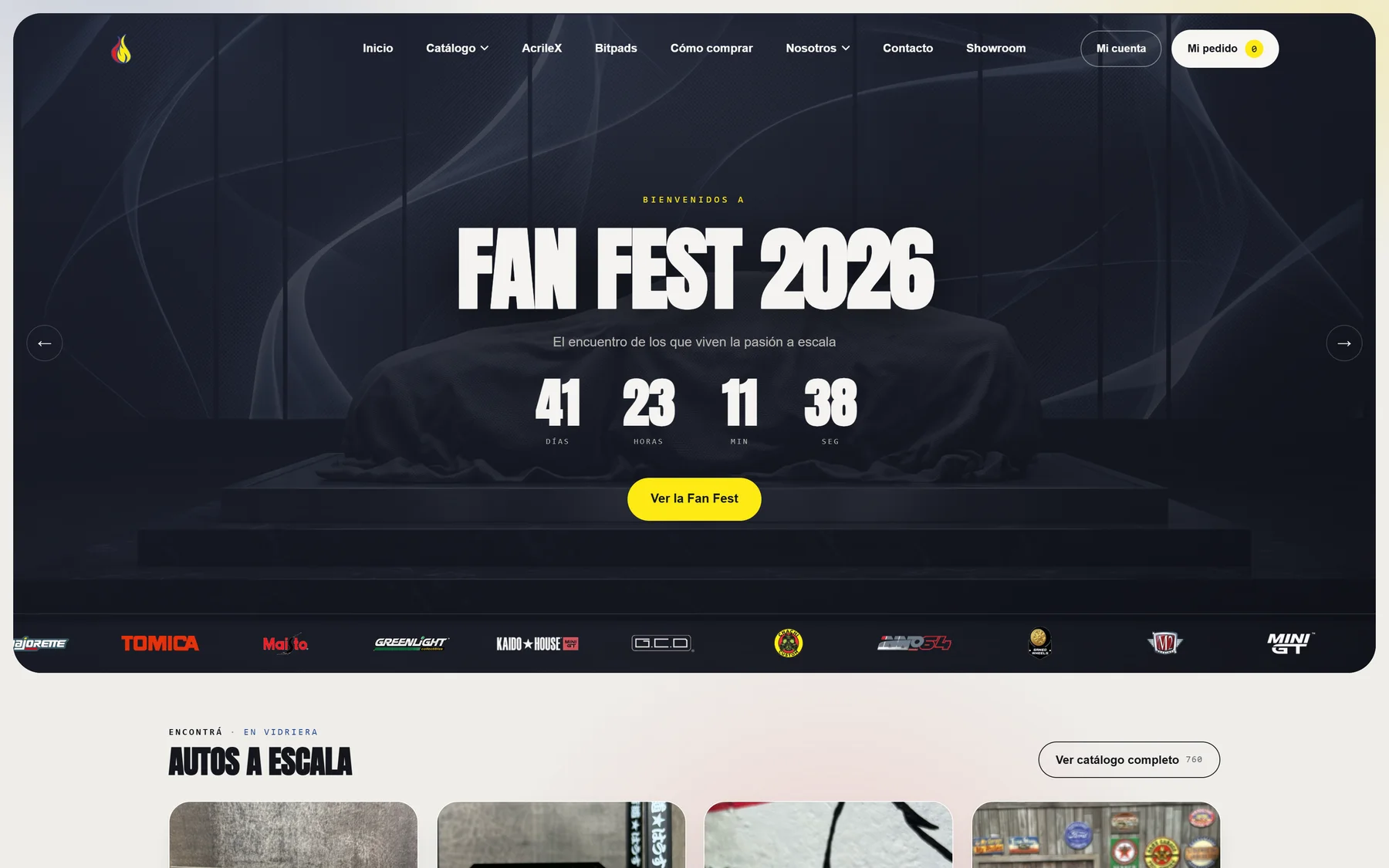
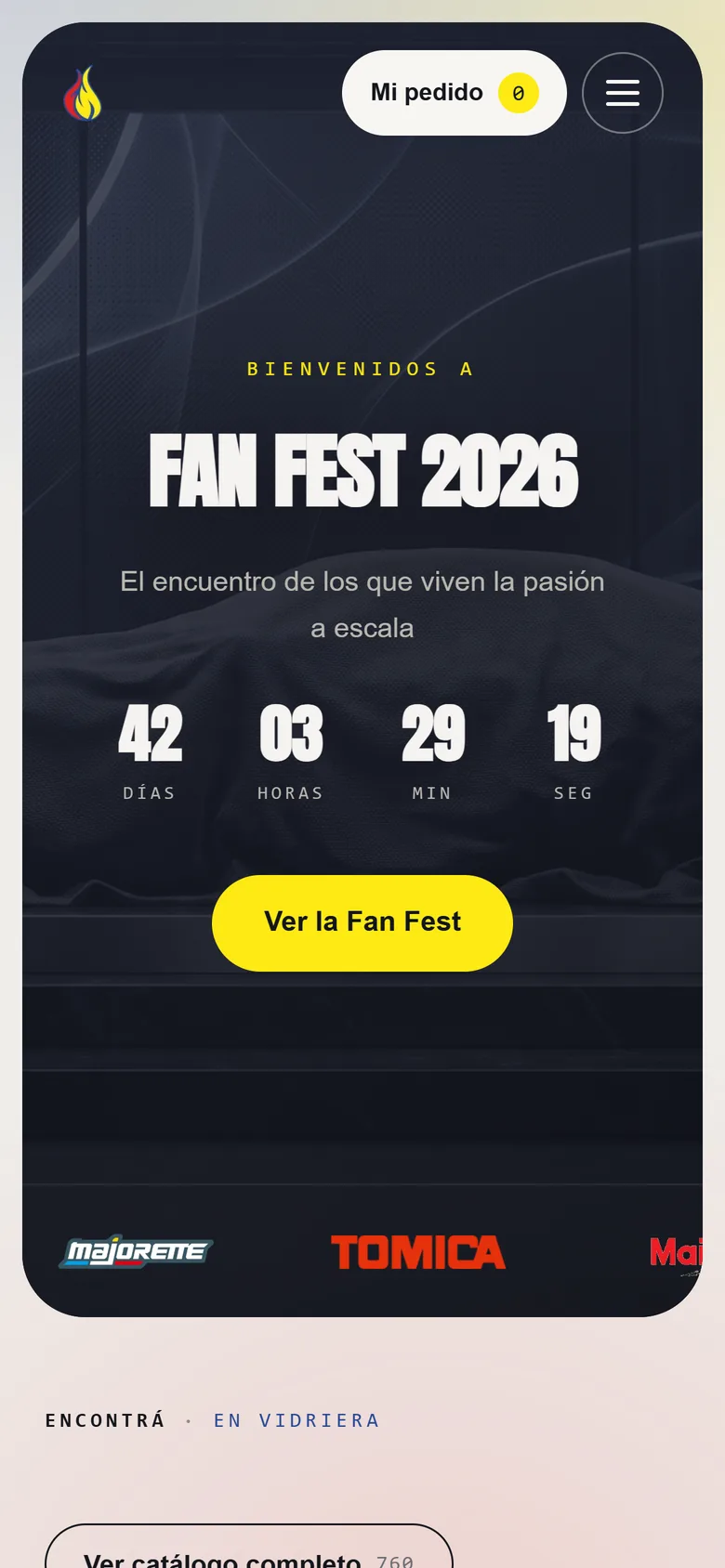
Fan Wheels sells die-cast cars on Instagram: Hot Wheels, Matchbox, Majorette, Tomica, Maisto, Greenlight. Its catalog lived on a rented platform that looked nothing like the brand, and orders arrived by direct message.
The brief was to replace it with a site of its own, with a dashboard as simple as the one they already used. There were two conditions: no online payments, and a dashboard for two people who aren't technical.
Sell where you already sell
The shop doesn't sell at a checkout: it sells on WhatsApp, in conversation. Forcing online payments would have added fees and steps without changing where the sale is closed.
So the cart doesn't charge: it writes the order message with the items and the total, and opens WhatsApp with everything filled in. The customer arrives at the conversation with the order ready, and the shop answers as always.
One price, entered by hand
In an imports business, the day's exchange rate can't decide what a piece costs. Each car has a single price, entered by hand: the dashboard suggests a value, but the one the person enters wins.
The catalog is also a showcase
Zero stock doesn't hide a product: it stays on the shelf, with the reason in plain sight. For a collector, seeing what was there is part of the catalog too.
And uploading a photo to a hidden product publishes it automatically. It was the click everyone always forgot, so we took it out of the way.
What we took away
The site was designed around how the business sells, not the other way around. Today it's where Fan Wheels sends its followers, and the shop publishes on its own from the dashboard.
 Fan Wheels
 Franco Borthiry